Scale
Three cells, one hand
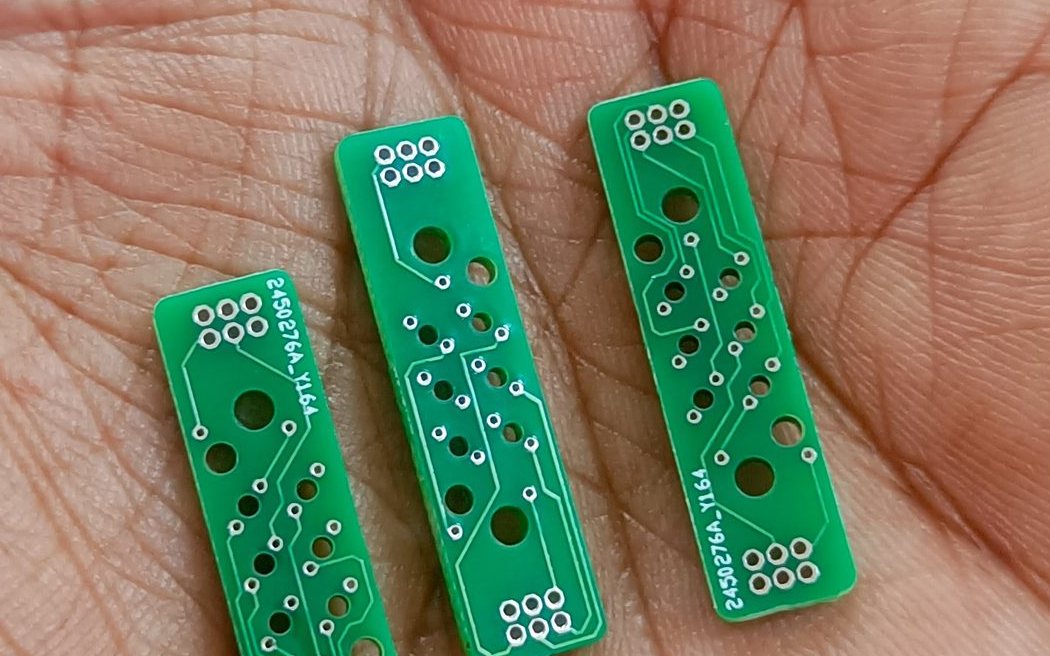
The boards that carry the coils. Each one is a single Braille cell.
Most Braille readers never own a refreshable display. This cell swaps the piezo stack for a printed cam and magnet.
Grand Prize, 2023 Hackaday Prize
Only about one in ten blind people reads Braille. The single biggest reason is that the hardware costs more than most families will ever have.
A commercial refreshable Braille display prices each cell at $100 to $150, because each dot is driven by a piezo bimorph. A forty cell display is therefore a car.
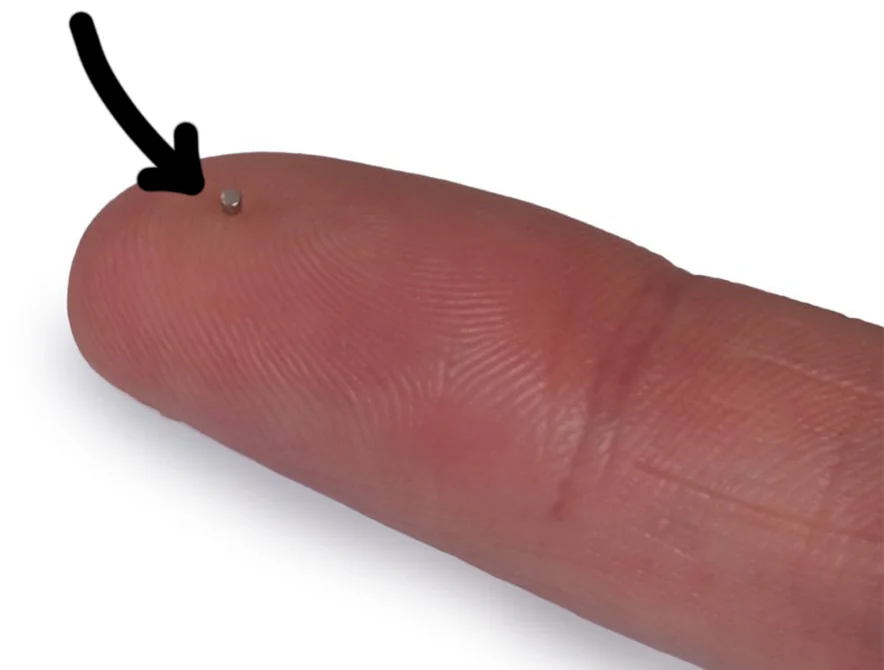
This module replaces the piezo stack with an eccentric cam carrying a 1mm by 0.5mm rare-earth micromagnet. A small coil flips polarity, the cam rotates between two positions, and the pin rises or drops. Once it is up, the geometry holds it there: the weight of a reading finger cannot back drive it, so a static page draws no power at all.
The housings are SLA printed. The coils are 50 micron enamelled copper wound on ferrite cores with a winding tool that is itself 3D printed. Peak draw is 1W while a single pin actuates, and adding ferrite cores took the refresh from 200ms per pin down to 50ms.
Raw materials come to roughly one dollar a cell. It won the Grand Prize in November 2023, the final year of the Hackaday Prize's ten-year run. The project is open, and it was built with a team credited on its project page.
The boards that carry the coils. Each one is a single Braille cell.
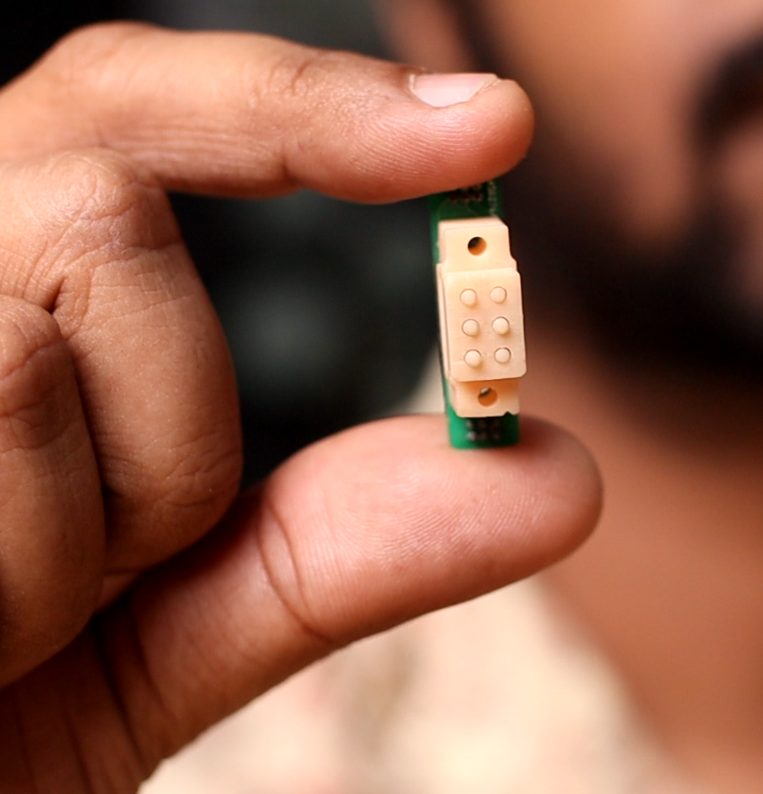
Housing, coils and board together.
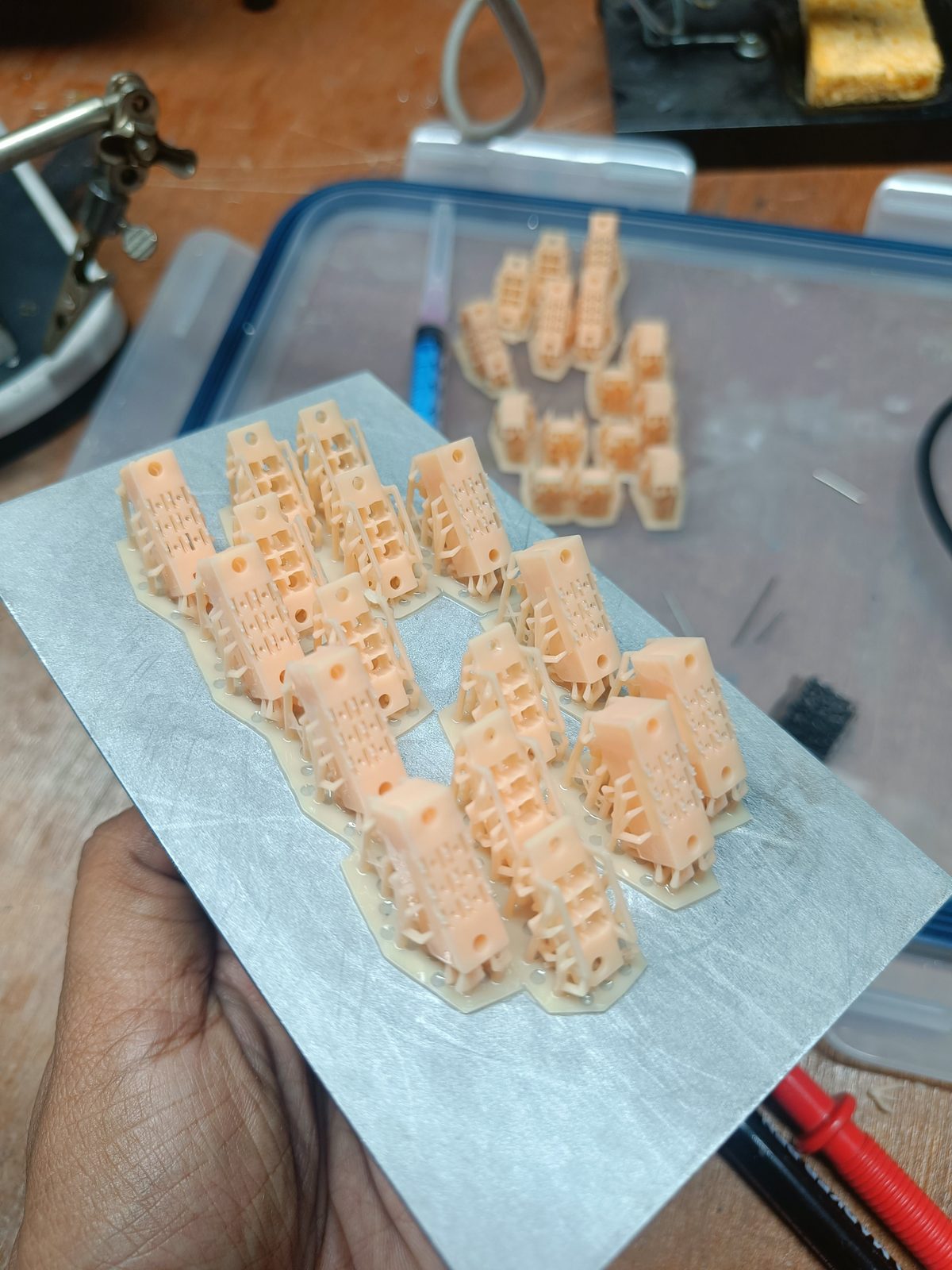
Resin housings on supports, before cleaning.
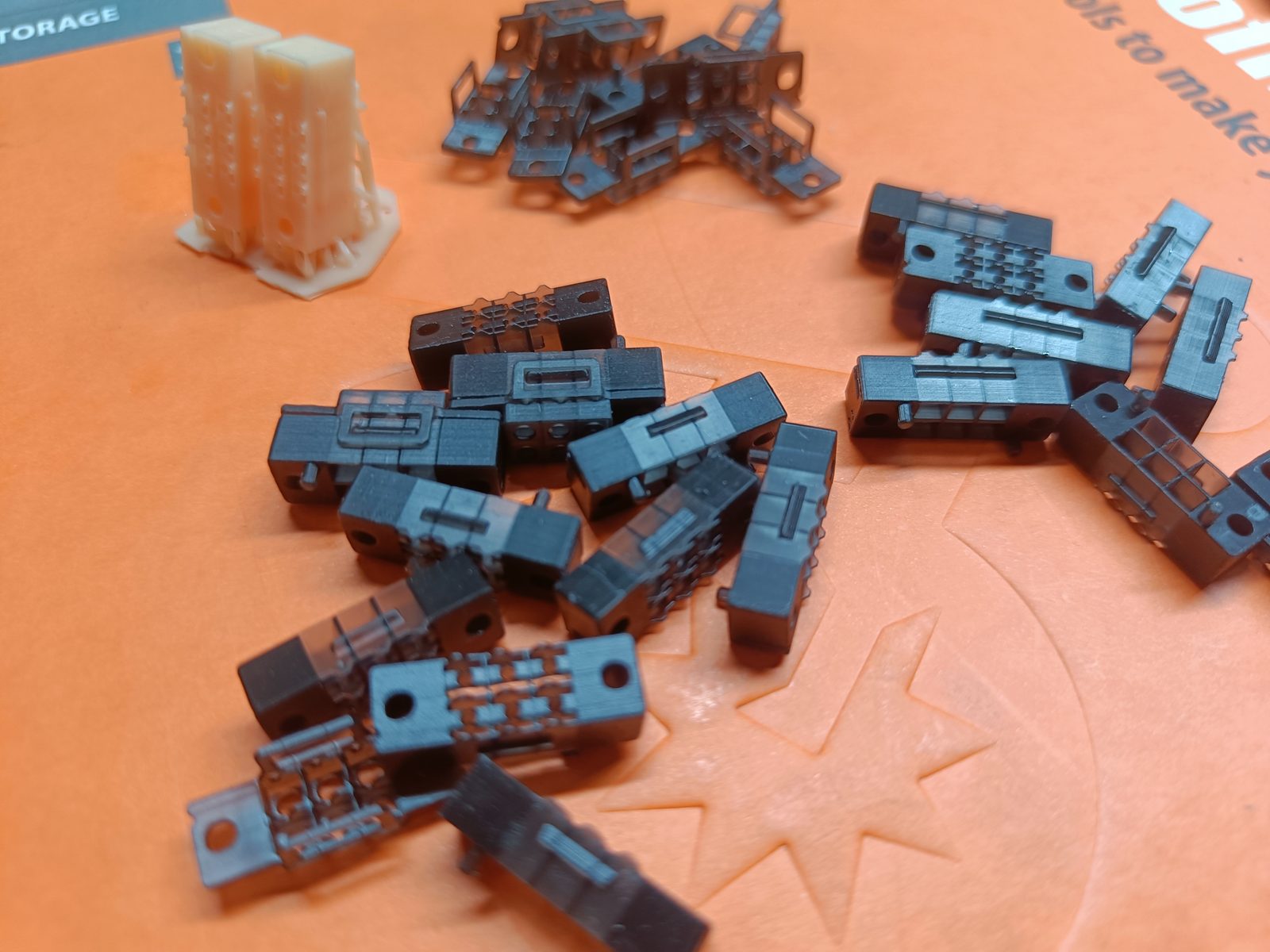
Cams, followers and cell bodies, mid-revision.
Four parts per dot. The cam carries the magnet, the electromagnet turns the cam, and the geometry holds the pin where it was put.
The Grand Prize was the seventh year of work, not the first week of it.
The first version was published in 2016, with Paul D'souza. It used vibration motors from mobile phones, with the eccentric weights replaced by shaped cams, to push the pins of a printed cell up and down. Hackaday covered it that April.
It worked, and it was still too expensive and too slow. So the mechanism was thrown away and redesigned around micromagnets, which is the version that won in 2023. Seven years between the two, most of it spent on the parts nobody photographs.
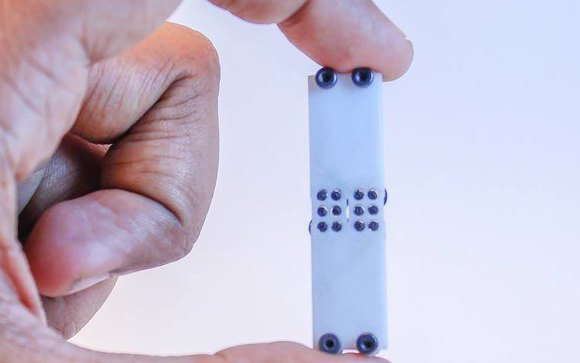
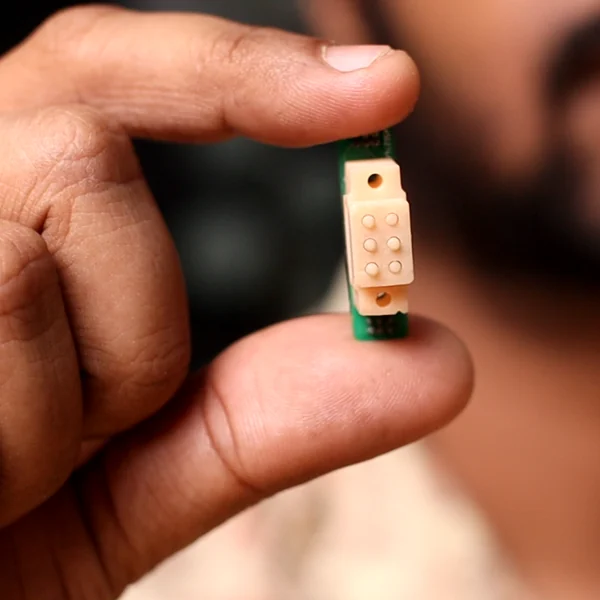
Printed, pinned, and small enough to hold between two fingers.
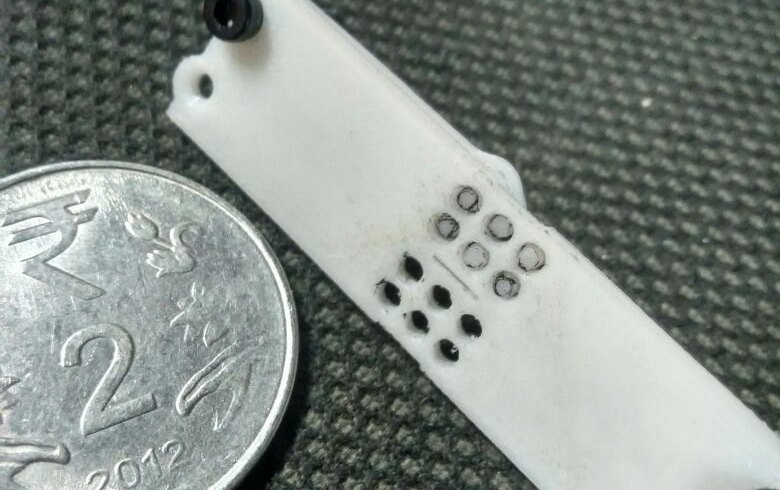
A whole cell, barely longer than the coin is wide.
Same size, different mechanism, and no piezo anywhere in it.
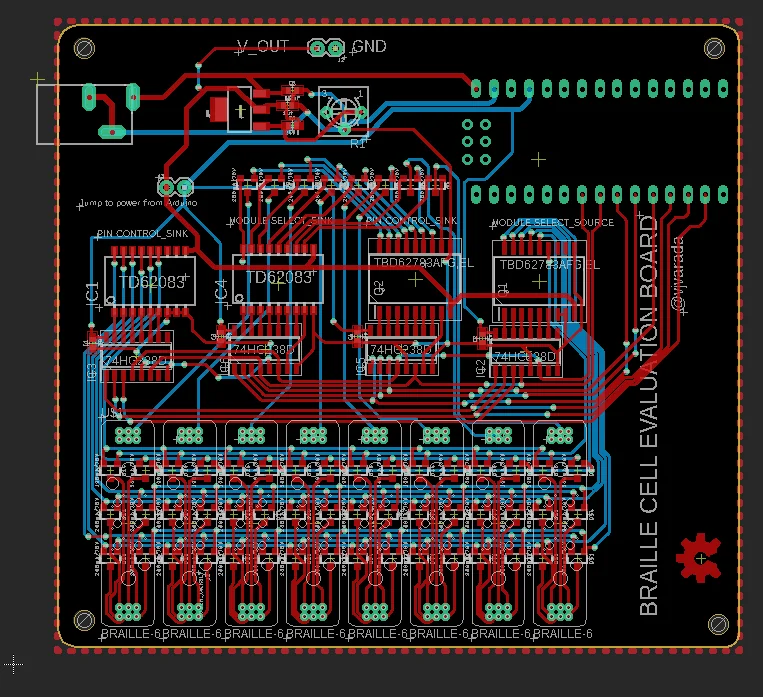
The evaluation board, which is where a mechanism stops being a demo.
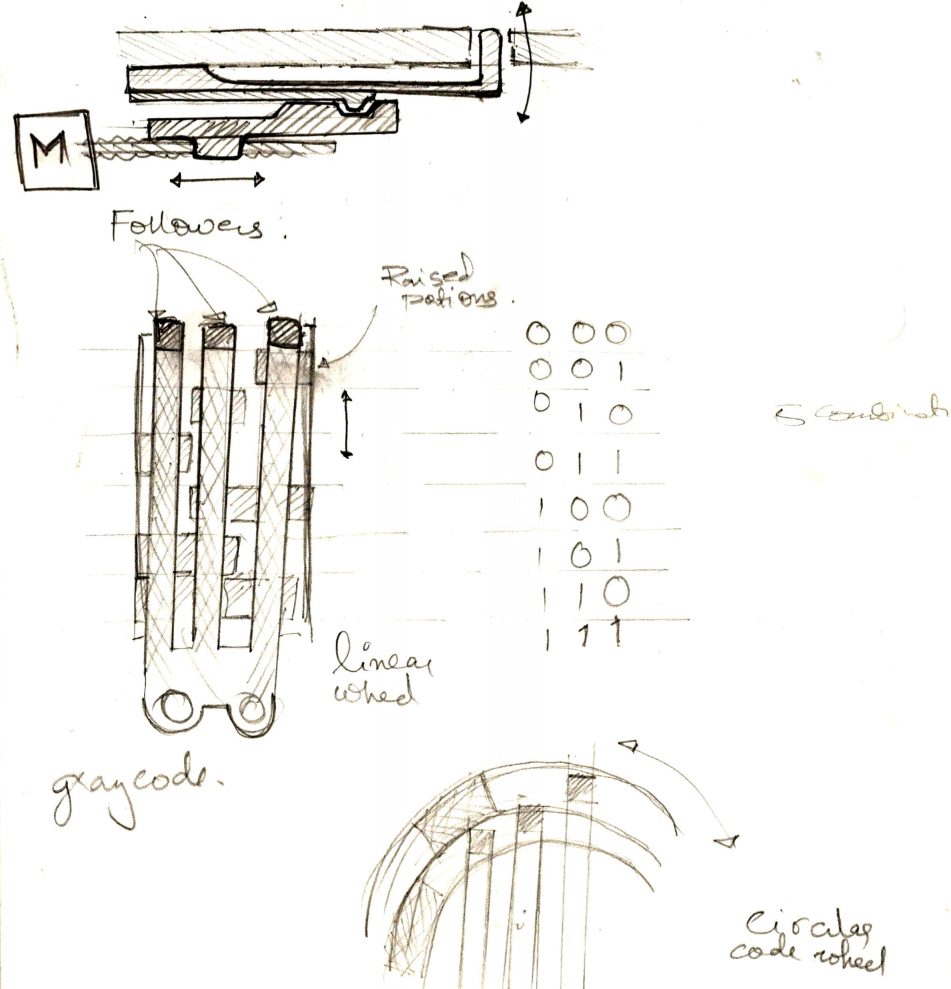
Unlike commercial units, which use expensive piezo-electric actuated pins, his design utilizes an array of tiny electromagnets to rotate even tinier cams.
Only about 10% of blind people around the world can read Braille. One primary reason is the high cost of Braille displays.