Technology Changemaker
TEDxYouth@Hyderabad
The case for pointing one manufacturing technology at problems it was never sold for. Also on TED's own site.
Mechatronics engineer, thirteen years a founder, and a long habit of publishing the work while it is still going wrong.
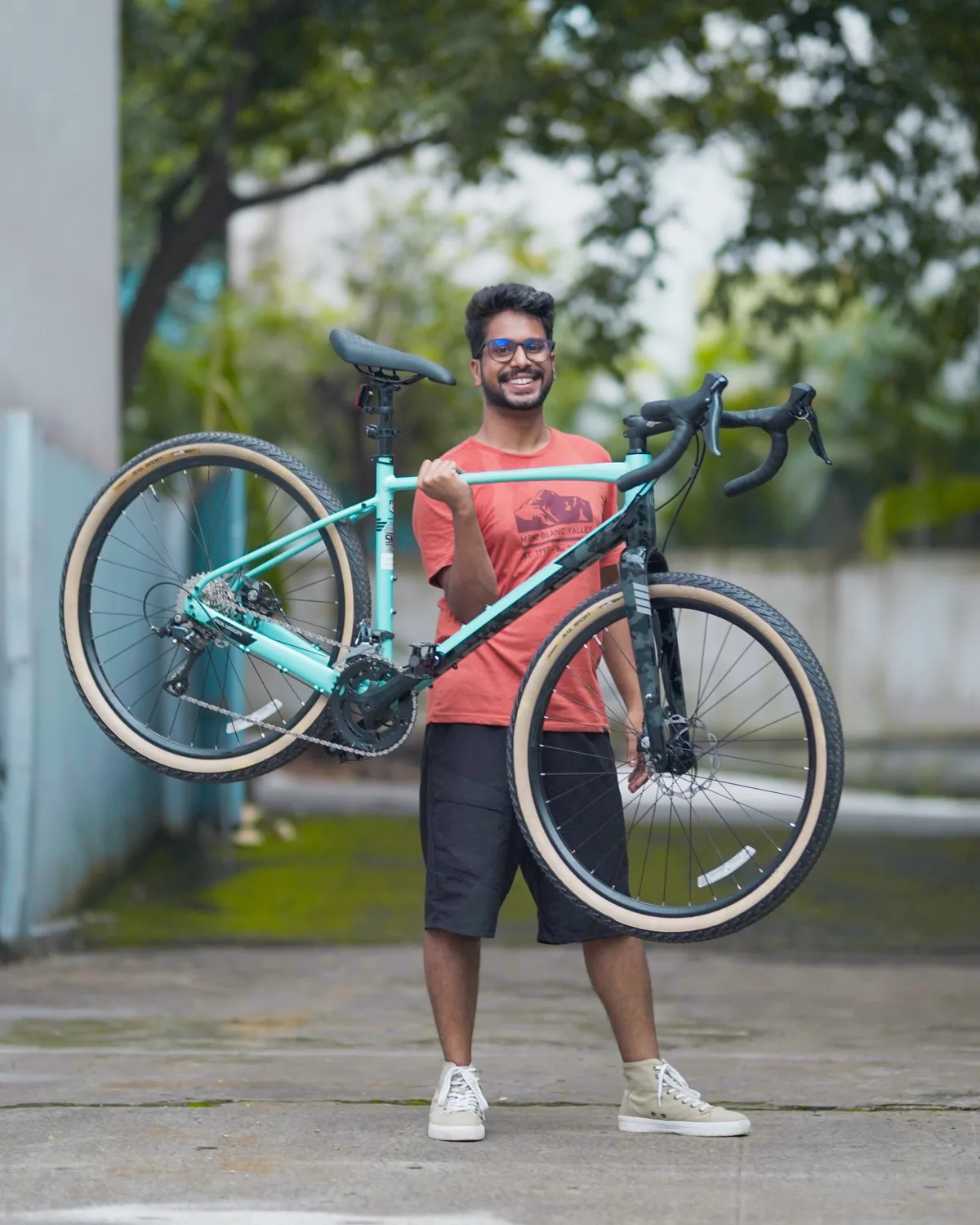
I am a mechatronics engineer who builds manufacturing hardware, and I have been doing it in public since I was nineteen.
It starts in the Andaman Islands. My father was an army officer posted there, and growing up on an island teaches you quickly what it costs when the power and the supplies both have to arrive by boat. That is where the interest in making things locally comes from, and it is the reason the rest of this reads the way it does.
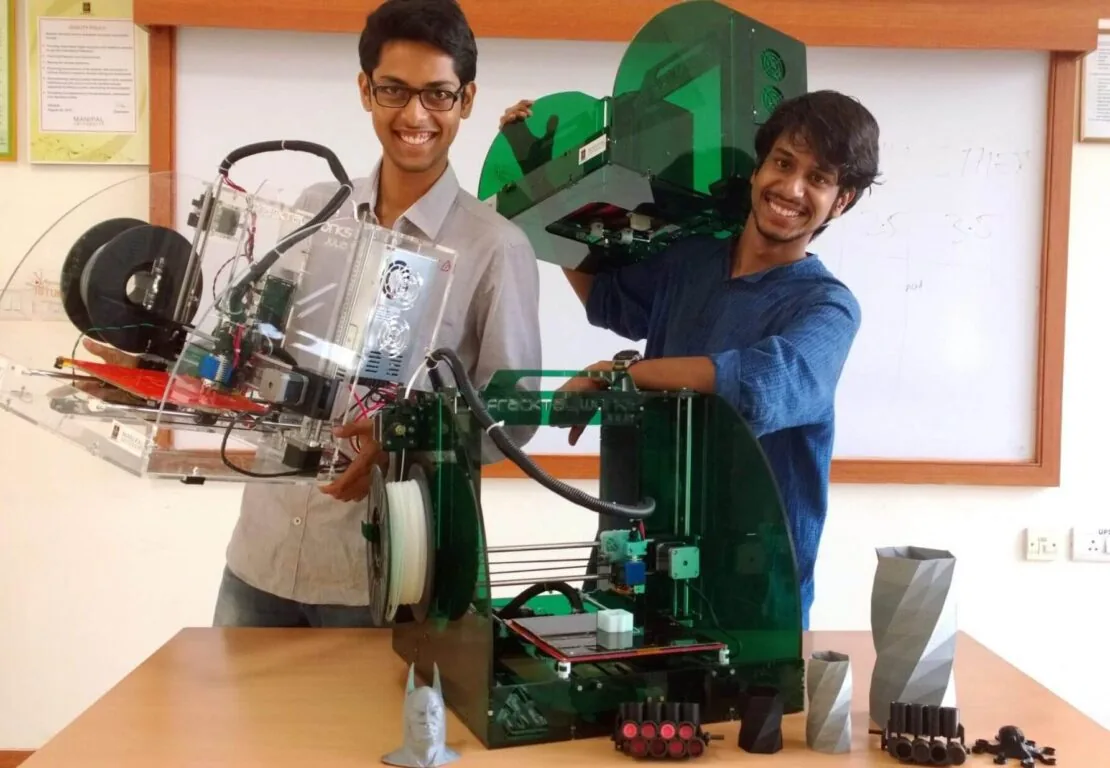
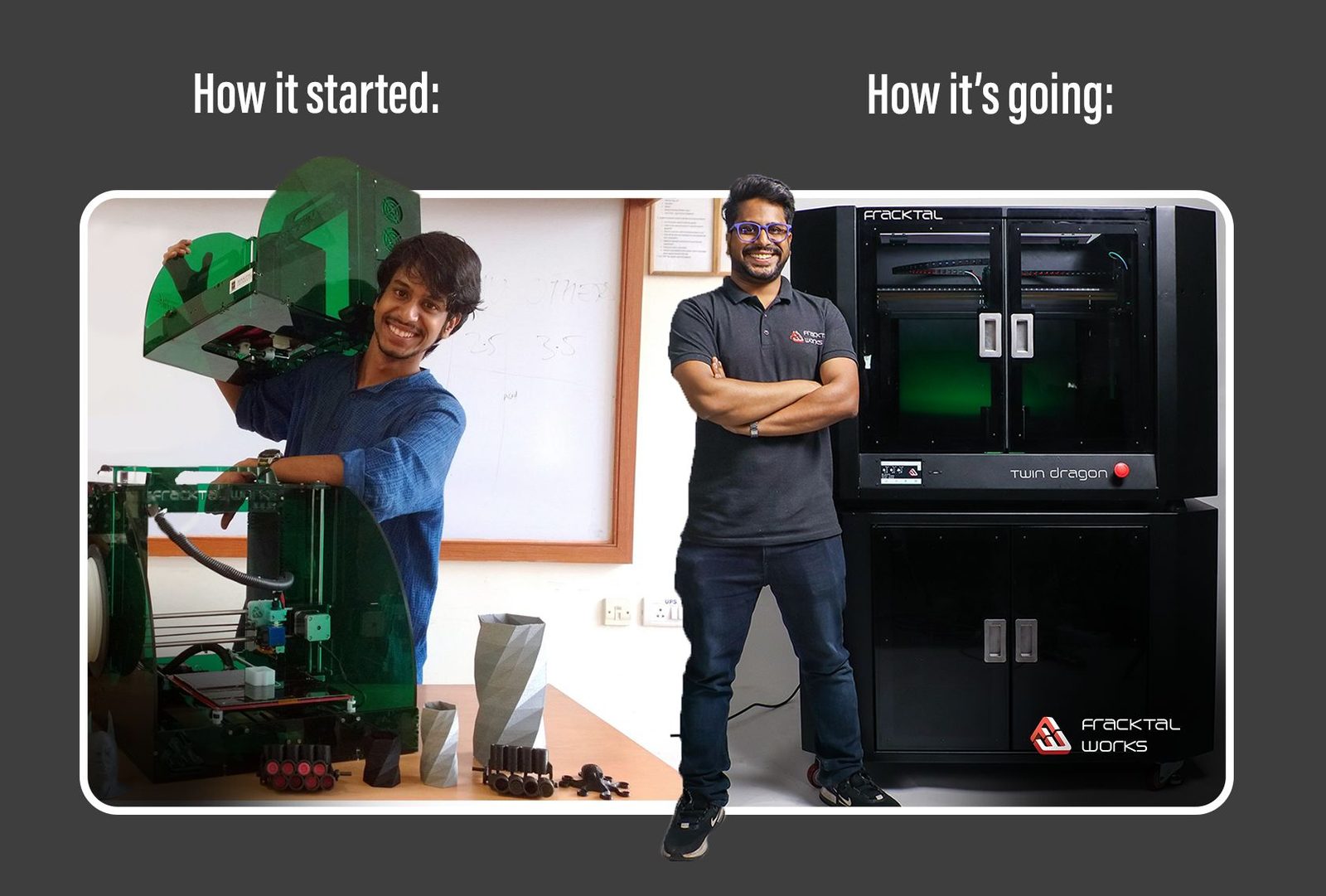
I studied mechatronics, robotics and automation at the Manipal Institute of Technology, and ran the robotics team there. In June 2013, at nineteen, Rohit Asil and I founded Fracktal Works because we were tired of waiting weeks for parts. Thirteen years later it is seven machines, more than 2,000 industrial customers and past 7,000 parts, for people including Ashok Leyland, TVS Motor, Godrej, Decathlon and several IITs.
In 2023 I won the Grand Prize of the Hackaday Prize — the top award, in the final year of its ten-year run — for an electromechanical refreshable Braille module. Each dot is moved by a printed cam holding a magnet a millimetre across, in place of the piezo stack that has kept Braille displays out of most readers' hands. It is published as open hardware, build logs and all.
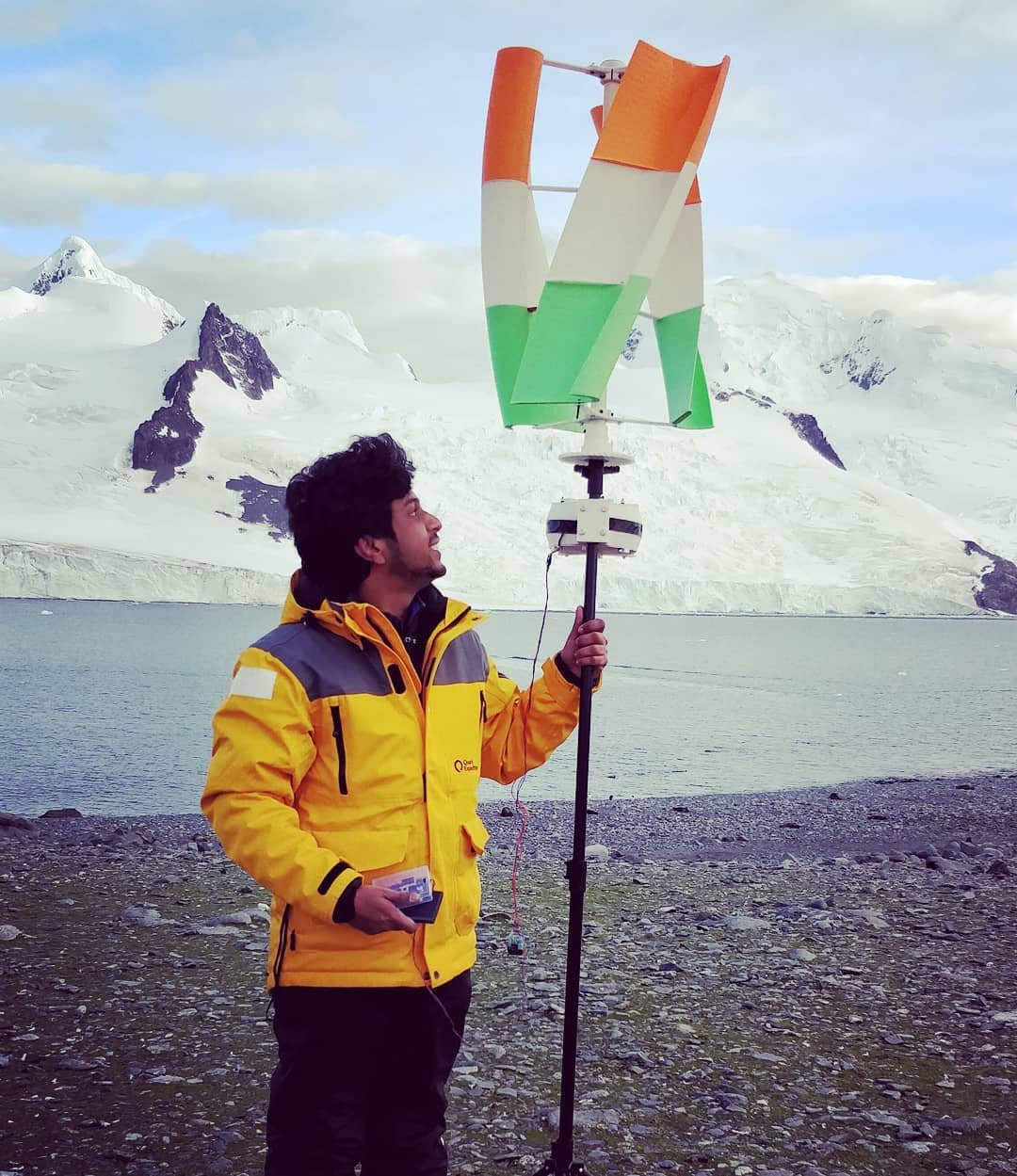
Before that, a wind turbine you can download and print, which went to Antarctica on an expedition with 2041 and Robert Swan. Before that, Tipo, a Braille keypad that took Best Design in 2017. Alongside all of it, Arduino for Kids, written with Priya Kuber and Rishi Gaurav Bhatnagar, on the theory that the right time to meet a microcontroller is before somebody tells you it is hard.
Now there are four companies rather than one: the printer manufacturer, a satellite payload team I consult to, a fixture-design product and an agent-run company OS. All four, and my actual role in each.
I live and work in Bengaluru. I publish nearly everything, which is why there is a lot of it to find.
An army posting, an island, and an early lesson in what it costs when everything arrives by boat.
Mechatronics, robotics and automation, and a robotics team that kept running out of parts.
Founded at nineteen with Rohit Asil. The first Julia was acrylic, because buying a printer was not an option.
Backed by Aarin Capital and the MEMG family office, which turned a project into a company.
Packt, with Priya Kuber and Rishi Gaurav Bhatnagar.
Hackaday Prize, for Tipo: a Braille keypad for a smartphone.
Technology Changemaker, on TED's own site.
A printed turbine and the Portal Point Generator, taken south with 2041. Power Harvesting semifinal.
61 printed pieces, over eight feet, off more than twenty Julia machines. Designed by Nudes and Folds; we manufactured it.
The Hackaday Prize's top award, in the final year of its ten-year run.
Unveiled at IMTEX by the Union Minister for Heavy Industries, built with FSID-IISc.
Speaking on open-source hardware for accessibility.
Constellation Aerospace as consultant; Bloc42 and Metorite as founder.
Everything claimed on this site has somewhere you can go and verify it. This is that list.
Nothing loads from YouTube until you press play.
TEDxYouth@Hyderabad
The case for pointing one manufacturing technology at problems it was never sold for. Also on TED's own site.
The Inventor Challenge
A profile of the work, with the hardware in hand rather than on a slide.
The Inventor Challenge
Tipo explained for a general audience: why a glass keyboard tells a blind user's fingers nothing.
The Inventor Challenge, episode 5
The whole episode, on inventions built for people rather than for markets.
Unlike commercial units, which use expensive piezo-electric actuated pins, his design utilizes an array of tiny electromagnets to rotate even tinier cams.
Over 20 of the company's industrial 3D printers were used to construct parts for the Jhada installation.
What started just as a college project is now a registered 3D printing company which has clients from Ludhiana to Coimbatore, and even some multinationals.
Only about 10% of blind people around the world can read Braille. One primary reason is the high cost of Braille displays.
The build logs, the repositories and the running commentary. Most of the work is published as it happens rather than written up afterwards, so these are usually ahead of this site.